
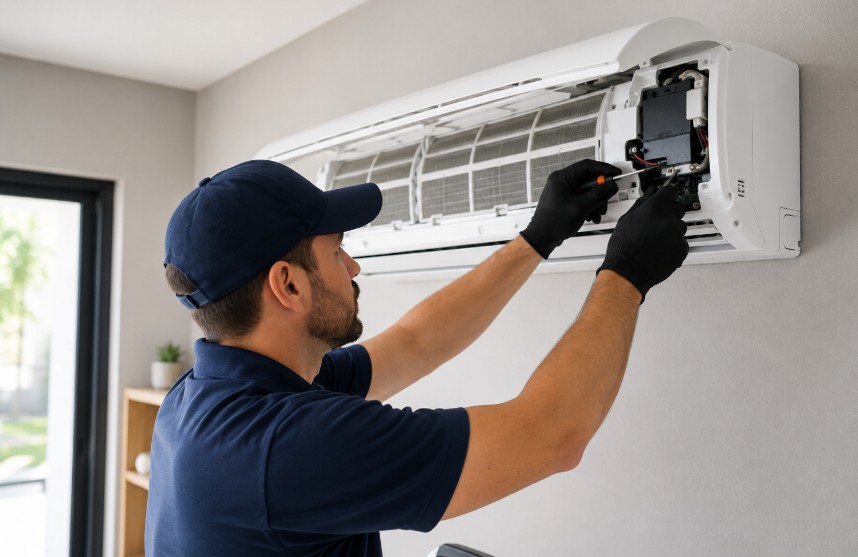
Ductless Mini Split Repair Memphis, TN
Need reliable mini split AC repair in Memphis? Our local HVAC professionals provide fast, dependable service for ductless and wall-mounted mini split systems. From cooling problems and strange noises to leaks and complete system failures, we connect you with experienced technicians who can help get your comfort back quickly.
Get a QuoteIf your ductless mini split has picked the middle of a Memphis August to quit on you, you already know why that's a problem. This city doesn't do mild heat — it does the kind of thick, syrupy heat that sits on your chest, and a mini split that's icing over, leaking onto the floor, or just blowing room-temperature air isn't something you can put off for a week. Memphis Emergency HVAC repairs ductless mini split systems all over Shelby County, from the wall-mounted unit cooling a sunroom addition in Cordova to the multi-zone system keeping a 1920s Central Gardens bungalow comfortable without ever touching the plaster walls with ductwork.
Emergency Mini Split Repair When You Can't Wait
Some mini split problems can sit on a to-do list for a few days. Others can't — not when a Memphis heat advisory has the heat index well past 100°F and the room your system covers is where an older family member, a baby, or a pet spends most of the day. We treat the following as priority calls, not next-week appointments:
-
No cooling during a heat wave, especially in a room relied on by someone vulnerable to heat — infants, elderly residents, or anyone with a health condition made worse by high heat.
-
Water leaking or pooling near the indoor unit, which can damage flooring, drywall, or the wall it's mounted on the longer it runs unchecked.
-
A burning smell, sparking, or a breaker that won't stay reset, which points to an electrical fault and is a safety issue, not just a comfort one.
-
A hissing sound or a sudden spike in your energy bill, which can mean a refrigerant leak that's only getting worse the longer the system keeps running.
Same-day service is available for situations like these across Memphis and Shelby County. If you're not sure whether what you're dealing with counts as an emergency, call and describe what's happening — we'd rather help you make that call than have you sit in a hot room second-guessing it.
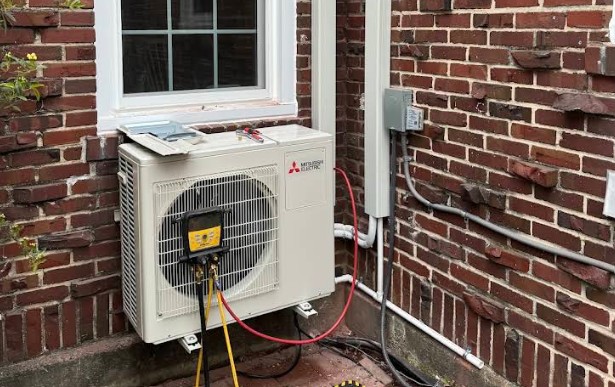
Why Memphis Homes Lean So Hard on Mini Splits
Memphis sits in the humid subtropical climate zone, which is a polite way of saying summers run hot and wet — August highs average around 91°F, and relative humidity hangs in the 65–70% range for most of the year. That combination is hard on any cooling system, but it's especially hard on a mini split, because these units are doing double duty: pulling heat out of the air and wringing moisture out of it at the same time. When a unit is undersized, dirty, or low on refrigerant, it starts losing that fight fast, and Memphis humidity makes the symptoms show up quicker than they would in a drier climate.
It's also worth saying why so many houses in this city run mini splits in the first place. A lot of Memphis's housing stock predates central air entirely — the shotgun houses and bungalows around Binghampton, Cooper-Young, and Orange Mound, the Victorian-era homes in Victorian Village and Central Gardens, the older brick homes throughout Midtown. Retrofitting ductwork into a 100-year-old plaster-and-lath house is expensive and often means tearing into walls and ceilings nobody wants touched. Mini splits solve that. They're also the go-to fix for the rooms central air never quite reaches — a converted garage in Bartlett, a sunroom in Germantown, a finished attic in East Memphis, a home addition in Collierville. If any of that describes your situation, you're not alone, and it's exactly the kind of system we work on every week.
Signs Your Mini Split Needs Repairing
Before you assume the worst, check the breaker and make sure the remote has fresh batteries — it sounds obvious, but it's a real fix more often than people expect. Beyond that, a unit that won't power on is usually pointing to a blown capacitor, a tripped safety switch, a control board issue, or a wiring problem, all of which are more common in Memphis's older housing stock where electrical systems weren't built with a modern mini split's power draw in mind.
A mini split should be quiet — that's half the appeal. Rattling or buzzing from the outdoor condenser often means storm debris (sweetgum balls, pine straw, or cottonwood fluff are the usual Memphis culprits) has worked its way into the fan housing. Clicking on startup can mean a failing relay. A hissing sound, especially paired with weak airflow, can point to a refrigerant leak, which isn't something to wait out.
Some condensation is normal, especially given how much moisture Memphis air holds. A steady drip or a puddle under the indoor head almost always means the condensate drain line is clogged — algae growth is common in a climate this humid — or that the drain pan has cracked with age. Left alone, it'll damage flooring, drywall, or the wall the indoor unit is mounted on.
Ice forming on the outdoor condenser, even in July, is a classic sign of low refrigerant, a dirty coil restricting airflow, or a failing fan motor that's stopped the coil from getting the airflow it needs to stay above freezing. Running the system with ice on it can damage the compressor, which is the most expensive part to replace.
Common Mini Split Problems We Repair Across Shelby County
Memphis regularly lands on national lists for worst cities for seasonal allergies, and all that pollen, along with everyday dust, ends up in your mini split's filter. A clogged filter is the single most common reason a unit that used to cool fine suddenly can't keep up — and it's also the cheapest fix on this list, which is why we always check it first.
Faulty wiring, worn capacitors, and tripped breakers show up more often in homes with older electrical panels, and Memphis's spring and summer storm season adds power surges into the mix. If your unit trips a breaker repeatedly or shuts off mid-cycle, that's an electrical issue worth having looked at before it damages the compressor.
The outdoor condenser needs airflow on all sides to work properly, and Memphis yards make that hard — sweetgum trees, leaf litter, spring pollen buildup, and debris from our not-infrequent severe thunderstorms all collect around outdoor units surprisingly fast. We clear obstructions and check the coil underneath, since blocked airflow is often mistaken for a bigger mechanical problem than it actually is.
Leaks typically show up at line set connections, flare fittings, or indoor coil joints. A system that's low on refrigerant will run constantly without ever quite reaching your set temperature, and it'll keep losing efficiency until the leak is found and sealed — simply "topping off" refrigerant without fixing the leak is a temporary band-aid at best.
Memphis humidity is tough on electronic components over time, and we do see corrosion-related control board failures in units that are 8+ years old, especially outdoor-mounted control boxes that weren't sealed well at installation.
Compressors, fan motors, and capacitors all have a service life, and constant cycling through Memphis's long cooling season (we're talking April through October most years) wears them down faster than in milder climates. We carry common parts for the major brands so most repairs don't require a second visit.
Our Mini Split Repair Service
Here's what to expect when you call us:
We ask a few questions up front — the brand, how old the system is, and what you're seeing (noise, leak, ice, no power) — so the technician shows up already knowing what to check first.
On-site diagnostic. We inspect the indoor head, outdoor condenser, line set, electrical connections, and refrigerant charge to find the actual cause, not just the symptom.
A straight answer and a written quote before any repair work starts. No surprise line items.
The repair itself, done with manufacturer-correct parts and refrigerant.
A full system test — we don't consider the job done until the unit is holding temperature and cycling normally.
We work on the brands installed throughout Memphis and Shelby County, including Mitsubishi Electric (M-Series, MSZ-FS, and Hyper-Heat H2i systems), Daikin (Aurora, FIT, and Quaternity lines — Daikin's engineering for high-humidity climates makes it a common pick here), Fujitsu Halcyon and Airstage systems, LG, Gree, Pioneer, Carrier, Bosch, MRCOOL, and Senville. We also service multi-zone setups, which are common in Memphis additions and renovated older homes where one outdoor condenser feeds several indoor heads — if just one zone in your system has stopped working, that usually doesn't mean the whole system is failing.
Repair or Replace? What to Weigh Before You Decide
Not every mini split problem is worth fixing, and we'll tell you honestly when replacement makes more sense than another repair. A few things worth knowing:
-
Age matters. Most ductless mini splits last 12–15 years with reasonable maintenance. A unit already past that mark that's showing a major failure — a bad compressor, for instance — is usually not worth a repair that costs a large fraction of a new system.
-
R-22 systems are a special case. If your mini split is old enough to run on R-22 refrigerant (sometimes still called Freon), production of that refrigerant in the U.S. has been phased out for years, which makes it scarce and expensive to source for a top-off or leak repair. If you're dealing with an R-22 leak, replacement with a modern R-410A or R-32 system is almost always the more sensible route.
-
Frequency is a signal. One repair in ten years is normal wear. Two or three service calls in a single Memphis summer usually means the system is nearing the end of its useful life, even if each individual fix is small.
-
Multi-zone systems don't need an all-or-nothing decision. If one indoor head has failed but the rest of the system and the outdoor condenser are healthy, repairing or replacing just that zone is usually the right call — not a full system swap.
-
Efficiency adds up. Older mini splits fall well below today's SEER2 efficiency standards (the federal minimum has been 14.3 SEER2 since 2023, and many current Daikin and Mitsubishi units clear 20+). If your MLGW bills climb every summer alongside more frequent repairs, that's worth factoring into the math.
We'll always give you both numbers — what the repair costs and what a comparable replacement runs — so you can make the call with real information instead of guessing.
A Note on Permits — Especially in Memphis's Historic Districts
Most mini split repairs — swapping a capacitor, clearing a drain line, fixing a control board — don't require a permit. Work that touches refrigerant lines, electrical circuits, or involves swapping out a full system does fall under the Memphis and Shelby County Office of Construction Code Enforcement, handled through the Develop901 portal. It's worth knowing too: if your home sits in one of Memphis's local historic districts — South Main, Beale Street, or Victorian Village, for example — any exterior work, including where an outdoor condenser is mounted, can require a Certificate of Appropriateness from the Memphis Landmarks Commission before installation. If your property falls into that category, we'll flag it and walk you through what's needed rather than let it become a surprise.
Why Choose Memphis Emergency HVAC
We know what Memphis homes are working with. From pre-war Midtown bungalows with no ductwork to new-build additions in Cordova and Collierville, we've seen how differently a mini split behaves depending on the house it's in.
- Technicians who know these systems — trained on the major brands we service, not generalists guessing their way through a ductless system.
- Upfront pricing. You see and approve the cost before any repair work starts — no surprise line items on the invoice.
- Licensed and insured.
- Same-day service available.
Areas We Serve
We repair mini splits throughout Memphis and the surrounding Shelby County area, including:
Don't see your neighborhood listed? Give us a call — if you're in Shelby County, there's a good chance we cover it.
FAQs
How much does mini split repair cost in Memphis?
It depends entirely on what's wrong. Simple fixes like a dirty filter, a clogged condensate line, or a worn capacitor are typically on the lower end, often in the $150–$350 range. Mid-range repairs — a fan motor or control board — usually run $300–$650. Refrigerant leak repairs and major component replacements, like a compressor, cost more and vary widely depending on the system and what's needed to fix it right. These are general industry ranges, not a quote — we'll always give you an exact price for your specific system before any work starts.
Do you repair R-22 (Freon) mini splits?
Yes, when parts and refrigerant are available, but we'll be upfront if replacement makes more financial sense — R-22 is scarce and expensive since U.S. production was phased out.
How does Memphis's humidity affect my mini split?
It makes your system work harder to remove moisture as well as heat, which is why dirty filters, clogged condensate lines, and refrigerant issues tend to show up faster here than in drier parts of the country.
Is a leaking mini split an emergency?
Water leaking onto flooring or drywall can cause real damage quickly, so we treat leaks as a priority call, even if the system is still cooling.
Do you work on multi-zone systems?
Yes. If one indoor head in a multi-zone setup fails, we can usually diagnose and repair just that zone without touching the rest of the system.
Will my homeowners insurance or the manufacturer's warranty cover this repair?
It depends on the cause of the failure and how old the system is — we'll help you figure out whether the issue is likely covered under a manufacturer warranty (most run 10–12 years on the compressor when registered) before you pay out of pocket.
Do I need a permit to have my mini split repaired?
Most standalone repairs don't require one. Work involving a full system replacement, new electrical circuits, or homes in a local historic district can. We'll let you know if your specific job needs one.
How often should I get my mini split serviced in Memphis's climate?
Given how long our cooling season runs — typically April through October — we recommend a filter check every 4–6 weeks during peak season and a full professional tune-up once a year, ideally in spring before the heat sets in.
Do you offer emergency or same-day service?
Yes — same-day service is available for mini split repairs across Memphis and Shelby County.
