
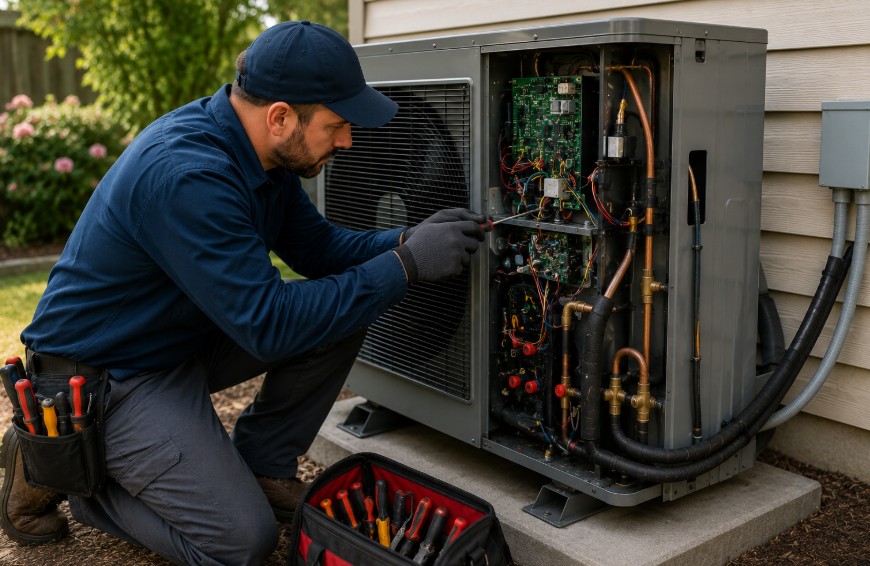
Emergency Heat Pump Repair in Memphis, TN
Heat pump not heating — or not cooling? A licensed technician can be dispatched today, nights, weekends, and holidays included, with a real diagnosis before any repair starts.
A heat pump doing double duty — heating and cooling the same home through one system — has more that can go wrong than a standard AC or furnace, and it's not always obvious which part is actually failing. Memphis Emergency HVAC Pros provides emergency heat pump repair across Memphis and Shelby County, any time of day, with technicians who understand the difference between a heat pump problem and a straightforward AC or furnace issue. Whether your system is stuck in one mode, blowing weak air, or the outdoor unit is iced over, we diagnose it properly before recommending a fix.
Why Heat Pumps Have a Different Relationship With Memphis Weather
A heat pump isn't just an AC system that also heats — it's different technology, and that changes how Memphis weather affects it. In cooling mode, a heat pump behaves like a standard AC unit, and everything that stresses AC systems here — humidity, attic heat load, long summer run-hours — applies the same way.
Heating mode is where it gets more interesting. A heat pump produces heat by pulling warmth out of the outside air, even when it's cold, and moving it indoors. That process gets less efficient as the outdoor temperature drops, simply because there's less heat in the air to extract. Memphis's mild winters — plenty of days in the 40s and 50s — are actually close to ideal conditions for a heat pump to run efficiently. The problem shows up during the city's occasional hard freezes and ice events, when outdoor temperatures drop past the system's "balance point" (often somewhere in the 25–35°F range, depending on the unit) and the heat pump alone can't keep up. Backup electric heat strips take over at that point — a far less efficient way to produce heat, and one many homeowners don't realize their system even has until an electric bill spikes during a cold snap.
Newer homes across Cordova, Collierville, Bartlett, Germantown, Arlington, and Lakeland are the most likely in the Memphis area to run heat pumps rather than gas furnaces, which means these are also the neighborhoods where "no heat during a freeze" calls most often trace back to a defrost cycle or backup heat issue rather than the heat pump itself failing outright.
Signs Your Heat Pump Needs Emergency Repair
Could mean a stuck reversing valve, a failed compressor, or backup heat not engaging when it should.
Some frost during a defrost cycle is normal; a heavily iced coil that never clears points to a defrost board or sensor failure.
Blowing cold air when set to heat, or warm air when set to cool, is a classic sign of a failing reversing valve.
If the system runs constantly but the home still feels cool, backup heat strips may not be engaging.
Turning on and off repeatedly in either heating or cooling mode, often airflow or sensor-related.
Clicking, buzzing, or grinding, especially right as the system switches between heating and cooling.
Often means the system is leaning on backup heat strips instead of the more efficient heat pump cycle.
Common Heat Pump Problems We Fix in Memphis
-
Reversing valve failure — the component responsible for switching between heating and cooling; when it fails, the system gets stuck in one mode.
-
Defrost board or sensor issues — allow the outdoor coil to ice over without triggering a proper defrost cycle.
-
Backup heat strip failures — leave the system unable to supplement heat during a hard freeze.
-
Refrigerant leaks — affect both heating and cooling performance, since one refrigerant cycle handles both.
-
Compressor problems — the core of the system, and issues here affect performance in both modes.
-
Faulty thermostats — especially units not configured correctly for heat pump operation, including auxiliary heat settings.
-
Electrical and wiring issues — common with age, and heat pumps log more total run-hours per year than a furnace-only system since they also handle cooling.
What to Expect: Our Emergency Heat Pump Repair Process
-
Initial Inspection — Assessment of both the indoor air handler and outdoor unit, since a heat pump issue can originate in either.
-
Thorough Diagnostics — Testing the reversing valve, defrost cycle, refrigerant charge, and backup heat components to find the actual cause.
-
Upfront Quote — A clear price before any work begins.
-
Repair — Most issues resolved in the same visit.
-
Final System Test — Confirming the system heats and cools properly, and switches between modes correctly, before we leave.
What Affects the Cost of Emergency Heat Pump Repair
-
What's actually broken — A defrost sensor or thermostat fix costs far less than a reversing valve or compressor replacement.
-
Dual-mode complexity — Heat pumps have components a straight AC or furnace doesn't (reversing valve, defrost controls, backup heat strips), which can affect diagnostic time and parts cost.
-
Age and parts availability — Older heat pumps may need harder-to-source parts.
-
Timing — After-hours or cold-snap dispatch is quoted upfront, same as any other call.
We provide a free, upfront estimate before any work begins, so you get a real number for your specific system.
How a Heat Pump Actually Works (and Why That Changes What "Repair" Means)
A heat pump isn't a furnace with an AC bolted on — it's one system that moves heat in either direction using a single refrigerant cycle, and understanding the key parts explains why heat pump repair looks different from AC or furnace repair.
The reversing valve is what makes dual-mode operation possible. It changes the direction refrigerant flows through the system, which determines whether the unit is absorbing heat from outside and releasing it inside (heating) or doing the reverse (cooling). When this valve fails or sticks, the system gets stuck in one mode regardless of the thermostat setting.
The defrost cycle exists because the outdoor coil can frost over in cold, humid weather — the same conditions that define a Memphis winter. Periodically, the system briefly reverses into cooling mode to send warm refrigerant through the outdoor coil and melt the frost, while running indoor backup heat so the home doesn't feel a cold blast during the process. A failing defrost board or outdoor sensor can leave the coil icing over without ever triggering that cycle, which shows up as steadily declining heat output.
Backup heat strips — straightforward electric resistance heating elements — kick in when outdoor temperatures drop below the system's efficient operating range, or during a defrost cycle. They're a normal part of the system, not a sign something's wrong, but if they fail, the heat pump alone often can't keep up during Memphis's harder freezes.
Because a heat pump has all three of these components working alongside a standard AC-style refrigerant cycle, diagnosing a "no heat" call means checking more ground than a furnace repair would — part of why heat pump diagnostics tend to take a little longer to get right.
Why Waiting on Heat Pump Repair Costs You More
A small heat pump issue tends to compound quickly, because the system is working double duty. A reversing valve that's starting to stick can fail completely, leaving the home with no heat and no cooling until it's replaced. A defrost board that's misfiring can let ice build up on the outdoor coil until it restricts airflow enough to strain the compressor. And a homeowner who doesn't realize backup heat strips have failed may put up with reduced comfort all winter — or, just as often, run entirely on backup strips without noticing, which can spike electric bills far higher than a normally functioning heat pump would. Catching these issues early is almost always cheaper than waiting for a full system failure.
Why Memphis Homeowners Trust Us with Heat Pump Repair
-
24/7 emergency dispatch — real people answer, any hour, any day
-
Free, upfront estimates before repair work begins
-
Licensed and insured technicians who work on both the heating and cooling sides of the system
-
Transparent pricing — no guessing, no inflated add-ons
-
Satisfaction guaranteed on every repair
Service Area
We provide emergency heat pump repair throughout Memphis and Shelby County, including Bartlett, Cordova, Germantown, Collierville, Millington, Arlington, Lakeland, Whitehaven, Raleigh, Frayser, Hickory Hill, and Eads.
FAQs
Why is my heat pump's outdoor unit covered in frost or ice?
Some frost during a defrost cycle is completely normal in winter. A coil that stays iced over, or one that's heavily iced even in mild weather, usually points to a defrost board or sensor issue that needs a technician.
Why does my heat pump blow cool air in heating mode sometimes?
Air that feels cooler than expected during a defrost cycle is normal — backup heat should offset it. If the air feels consistently cool while set to heat, it may point to a reversing valve or backup heat issue instead.
Is it normal for my heat pump to run almost constantly in winter?
Longer run times in cold weather are normal, since the system works harder to extract heat as temperatures drop. Constant running paired with a home that still feels cold is worth having checked.
Why did my electric bill spike during a cold snap?
Often because the system leaned heavily on backup electric heat strips, which use significantly more electricity than the heat pump's normal cycle. If it happens on a night that wasn't unusually cold, it may point to a heat pump issue rather than normal backup heat use.
Can a heat pump really keep a Memphis home warm during a hard freeze?
Generally yes, especially paired with properly functioning backup heat, but performance depends on the system's age, sizing, and condition. A well-maintained heat pump handles Memphis winters fine; a struggling one will show it fastest on the coldest days.