
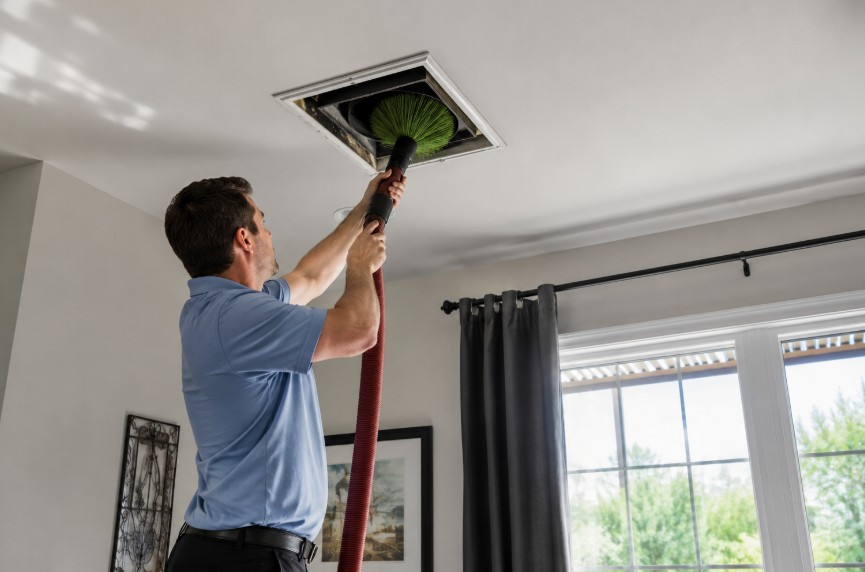
Indoor Air Quality Services in Memphis, TN
Musty smells, constant dust, or a house that never feels quite right? We assess and improve indoor air quality across Memphis and Shelby County — filtration, humidity control, ductwork, and more — with a real diagnosis before any recommendation.
Get a QuoteIndoor air quality isn't one thing — it's filtration, humidity, ventilation, and the condition of the ductwork carrying air through your home, and a real assessment looks at all of it rather than selling a single product. Memphis Emergency HVAC Pros evaluates and improves indoor air quality across Memphis and Shelby County, from a straightforward filter upgrade to a full duct sealing and humidity control solution. Whether you're dealing with persistent dust, musty odors, allergy symptoms that seem tied to your home, or an already-identified mold or ductwork issue, we start with an honest look at what's actually happening before recommending a fix.
Why Indoor Air Quality Is a Bigger Deal in Memphis Than Most Cities
Memphis doesn't just have hot summers and mild winters — it has some of the tougher indoor air conditions in the country, and the causes are specific enough to actually do something about.
Start with pollen. Memphis sits in the warm, humid Southeast, and cities in this region have historically dominated national rankings for the toughest places to live with seasonal allergies, largely because warm, humid conditions support longer and more intense pollen seasons for trees, grasses, and weeds. Separately, the Asthma and Allergy Foundation of America's own research has specifically named Memphis among the worst U.S. metro areas for asthma-related emergency room visits — a different measure than pollen counts alone, but one pointing to the same underlying reality: what's in the air here genuinely affects people's health, not just their comfort.
Then there's humidity itself. Memphis's long, humid summers create ideal conditions for dust mites and indoor mold growth, especially in homes where the AC system isn't actively pulling moisture out of the air as it cools (a mismatch we cover in more detail on our AC repair page). High indoor humidity doesn't just feel unpleasant — it's one of the most common reasons a home develops a musty smell, visible mold on ductwork or in closets, or a spike in dust-related allergy symptoms that seems to track with the weather.
Housing stock adds a third layer. Memphis has a meaningful share of homes — particularly older ones in Midtown, Cooper-Young, and other historic neighborhoods — built on raised pier-and-beam foundations with a crawlspace underneath, rather than a slab. Crawlspaces are notorious for trapping moisture, and air from an unsealed or poorly ventilated crawlspace can migrate up into the living space through gaps, outlets, and ductwork seams — sometimes called the stack effect. A home can look perfectly clean inside and still be pulling in musty, humid crawlspace air every time the HVAC system runs.
Signs Your Indoor Air Quality Needs Attention
-
Persistent dust that returns quickly after cleaning, even with regular vacuuming.
-
Musty or stale odors, especially near vents, in closets, or right after the AC or heat has been running.
-
Visible mold or mildew on vents, in bathrooms, or on window sills.
-
Allergy or asthma symptoms that seem worse indoors than outdoors, or that spike specifically when the system turns on.
-
Uneven humidity — a home that feels muggy in summer despite the AC running, or unusually dry and static-prone in winter.
-
Dust buildup or staining around supply vents.
-
Frequent headaches, fatigue, or respiratory irritation that improves when you're away from home.
-
Condensation on windows or visible moisture around ductwork, the attic, or a crawlspace.
Our Indoor Air Quality Services
Air Filtration
Upgrading from a basic fiberglass filter to a higher-efficiency pleated filter, or adding a whole-home filtration system, is often the single most cost-effective IAQ improvement available. We help homeowners choose the right filter for their specific system (see our MERV rating breakdown below — higher isn't automatically better).
Humidity Control
Whole-home dehumidifiers integrated directly into the HVAC system address Memphis's humidity at the source, rather than relying on the AC alone to manage moisture. Whole-home humidifiers address the opposite problem during Memphis's occasional dry winter stretches.
Air Purification
UV germicidal lights installed at the evaporator coil target mold and bacterial growth directly on HVAC components, where condensation naturally collects. Electronic and media-based air cleaners go beyond standard filtration to capture finer particles, including allergens that pass through a standard filter.
Ventilation and Fresh Air Exchange
Modern, tightly sealed homes — and increasingly, well-insulated renovated older homes — can trap stale indoor air, VOCs from cleaning products and furnishings, and elevated humidity with nowhere to go. An energy or heat recovery ventilator (ERV/HRV) brings in filtered outdoor air while recovering energy from the outgoing air, improving air quality without a big spike in heating or cooling costs.
Ductwork Services
Often the most overlooked piece of the indoor air quality picture, and in Memphis specifically, frequently where the real problem lives. Covered in detail below.
Mold Prevention
Addressing the humidity, ventilation, and moisture-intrusion issues above is the most effective mold prevention strategy for most homes. Mold needs sustained moisture to establish itself, and removing that moisture — rather than just cleaning visible growth after the fact — is what actually keeps it from coming back.
A Closer Look at Ductwork and Indoor Air Quality
Ductwork doesn't just move conditioned air around a home — it's also one of the most common sources of indoor air quality problems, and Memphis's housing stock makes this more true here than in a lot of places.
Leaky ducts pull in more than they let out.
Every gap, disconnected joint, or unsealed seam in a duct run is a place where conditioned air can escape — and just as importantly, where unconditioned air from an attic, crawlspace, or wall cavity can get pulled in. In a home with ductwork running through a hot, dusty attic (common across much of Memphis's housing stock, as covered on our AC and furnace repair pages), a leaky return can pull in attic insulation particles and dust and circulate it right through the house. In a home with a crawlspace, the same leaks can pull in humid, musty crawlspace air instead.
Sediment and debris accumulate over decades, not months.
Ductwork in a home that's 30, 50, or 70 years old has often never been cleaned, and dust, pet dander, and general debris build up along interior duct surfaces over that time. This usually isn't a health crisis on its own, but every time the system runs, some of that accumulated material gets pushed back into the living space — and it's a common, often-overlooked contributor to the "dust that comes back fast" complaint.
Duct sealing is frequently more impactful than duct cleaning.
Cleaning addresses what's already accumulated inside the ducts; sealing addresses the leaks that let outside contaminants in and conditioned air out in the first place. For most Memphis homes with genuine air quality complaints, a combination of the two — sealing first, then cleaning — tends to produce a bigger, longer-lasting improvement than either alone.
Older homes sometimes have duct insulation that needs professional handling.
Homes built before the 1980s occasionally have older insulation materials on or around ductwork that shouldn't be disturbed without the right precautions. A professional inspection identifies what's actually present before any cleaning or sealing work begins, rather than guessing.
Understanding MERV Ratings (and Why Higher Isn't Always Better)
MERV (Minimum Efficiency Reporting Value) measures how effectively a filter captures particles, on a scale that commonly runs from 1 to 16 for residential systems. A higher number means finer filtration — a MERV 13 filter captures much smaller particles than a MERV 8. It's tempting to assume a higher MERV rating is always the better choice, but that's not quite right for every system.
A filter with a higher MERV rating is also denser, which means more resistance to airflow. A residential AC or furnace not designed for that resistance can end up working harder to pull air through it, which in some cases reduces efficiency or strains the blower motor rather than improving air quality. The right filter depends on what your specific system can actually handle, not just the highest number on the shelf.
For most Memphis homes dealing with genuine allergy or dust concerns, a filter in the MERV 8–13 range, matched to what the system is rated for, tends to be the effective zone — paired with actually replacing it on schedule, which matters more than the rating itself in a lot of cases, especially during Memphis's heaviest pollen months.
What to Expect: Our Indoor Air Quality Assessment Process
-
Initial Consultation — Understanding your specific concerns: allergy symptoms, odors, humidity complaints, or visible mold.
-
Home and System Inspection — Assessing the HVAC system, ductwork, and relevant areas like the attic or crawlspace where issues often originate.
-
Upfront Recommendations — A clear explanation of what we found and what's actually worth addressing, with pricing before any work begins.
-
Service or Installation — Whether that's duct sealing, a filtration upgrade, a dehumidifier, or another solution matched to what we actually found.
-
Follow-Up Verification — Confirming the fix addresses the original concern, not just installing equipment and leaving.
What Affects the Cost of Indoor Air Quality Services
-
Scope of the issue — A filter upgrade is a much smaller project than whole-home duct sealing or a dehumidifier installation.
-
Ductwork condition and accessibility — Ductwork in a tight crawlspace or a difficult attic takes longer to service than an easily accessible garage or basement run.
-
Equipment selected — Whole-home dehumidifiers, UV systems, and ERV/HRV units vary in cost based on capacity and how complex they are to integrate with your existing system.
-
Extent of contamination or leakage — A duct system with extensive leaks or years of accumulated debris takes more time to properly address than a well-maintained one.
We provide a free, upfront estimate before any work begins, so you get a real number for your specific home.
When Indoor Air Quality Becomes a Health Emergency
Most IAQ concerns — dust, mild odors, seasonal allergy symptoms — are worth addressing but aren't urgent. A few situations are different:
-
Visible mold following a leak, flood, or major humidity event — especially if it's spreading quickly or covering a large area, since delaying treatment lets it establish further.
-
A carbon monoxide detector alarming, or symptoms like headaches and nausea that improve when you leave the house — treat this as a gas furnace safety issue first (see our furnace repair page), not a general air quality concern. Get outside into fresh air and call emergency services.
-
A sudden, strong chemical or burning odor from the HVAC system — shut the system off and call for service rather than continuing to run air through the house.
If you're dealing with one of these, don't wait for a scheduled assessment — call for same-day service.
Why Memphis Homeowners Trust Us with Indoor Air Quality
-
24/7 emergency dispatch for urgent air quality and safety concerns
-
Free, upfront estimates before any service begins
-
Licensed and insured technicians experienced with filtration, humidity control, ventilation, and ductwork
-
Transparent pricing — no guessing, no inflated add-ons
-
Satisfaction guaranteed on every service
Service Area
We provide indoor air quality services throughout Memphis and Shelby County, including Bartlett, Cordova, Germantown, Collierville, Millington, Arlington, Lakeland, Whitehaven, Raleigh, Frayser, Hickory Hill, and Eads.
FAQs
How often should I really be changing my air filter in Memphis?
More often than the standard 90-day recommendation in most cases — many Memphis homes benefit from a 30–60 day cycle, especially during spring pollen season and periods of heavy AC or furnace use.
Does duct cleaning actually improve air quality, or is it overhyped?
It depends on the ductwork's condition. In a system with years of accumulated debris or active leaks pulling in outside contaminants, cleaning — often paired with sealing — can make a real difference. In a newer, well-sealed system with regular filter changes, the benefit is usually smaller.
Why does my house feel humid even though the AC is running constantly?
Often because the system is cooling the air faster than it's removing moisture from it — common with oversized units, as covered in more detail on our AC repair page. A whole-home dehumidifier can address this directly rather than relying on the AC to do double duty.
Is my crawlspace actually affecting the air quality inside my house?
It can be, especially in older Memphis homes on pier-and-beam foundations. Air from an unsealed or poorly ventilated crawlspace can migrate into the living space, particularly through ductwork running through it.
Do I need a whole-home air purifier, or is a good filter enough?
For a lot of homes, a properly matched filter and a clean, sealed duct system handle most day-to-day air quality needs. Whole-home purification (UV or electronic) tends to make the most sense for households dealing with significant allergies, asthma, mold-prone areas, or specific concerns a standard filter doesn't fully address.