
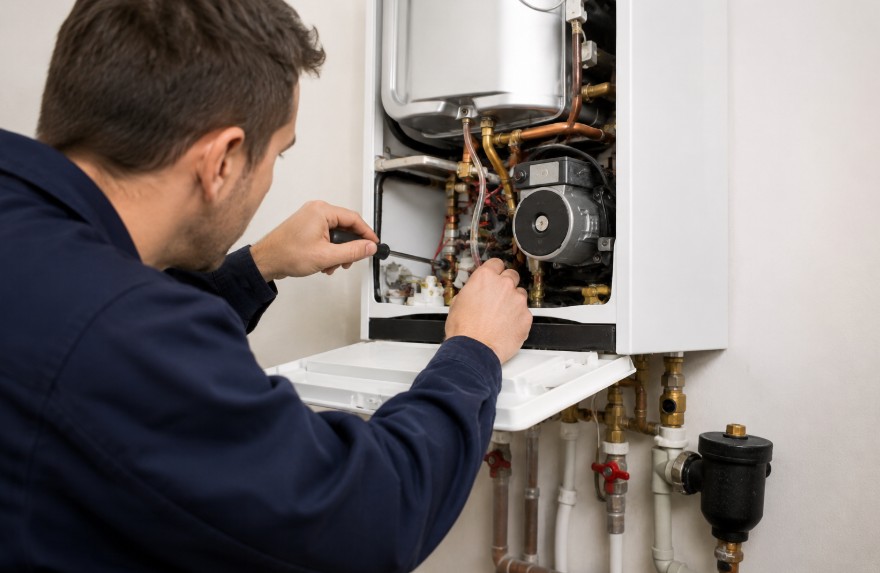
Emergency Boiler Repair in Memphis, TN
Radiators cold, or the boiler making a noise it shouldn't? A licensed technician can be dispatched today — nights, weekends, and holidays included — with a real diagnosis before any repair starts.
24 Hour Boiler Repair Service in Memphis, TN
A boiler acting up is a different kind of emergency than a dead AC or furnace — the system runs on water, not air, and that changes both the risks and the fix. Memphis Emergency HVAC Pros provides emergency boiler repair across Memphis and Shelby County, any time of day, from technicians who understand steam and hot water systems, not just forced-air equipment. Whether it's cold radiators, a pressure problem, or a boiler that won't fire at all, we diagnose the actual cause before recommending a repair.
Where Boilers Still Show Up in Memphis Homes
Unlike a lot of the Mid-South's newer housing stock, boilers aren't the default heating system in Memphis — most homes here run forced-air furnaces or heat pumps. But they haven't disappeared, and where they exist, it's rarely by accident.
The most common source is Memphis's older housing stock. Homes built in the early-to-mid 1900s in neighborhoods like Midtown, Vollintine Evergreen, Annesdale, and parts of Central Gardens were often originally built with radiator heat, long before forced-air ductwork and central AC became standard. Many of these homes never fully converted — a homeowner added window units or a mini-split for cooling decades later, but the original boiler and radiators are still doing the winter heating, sometimes the very same system that's been in the basement or a utility closet for 60-plus years.
The other common source is more deliberate: homeowners who've renovated or built additions with radiant floor heating, which runs on the same hot-water boiler technology as old-fashioned radiators, just delivered through tubing in the floor instead of a metal radiator. This shows up more in custom builds and higher-end renovations across the metro than in typical production housing.
Either way, a boiler in a Memphis home tends to be either genuinely old — sometimes older than the homeowner — or a deliberate, specialized choice. Both cases call for a technician who actually understands boiler systems, rather than one used to diagnosing furnaces who treats a boiler as "basically the same thing."
Signs Your Boiler Needs Emergency Repair
Could point to a circulator pump failure, an ignition problem, or a pressure issue keeping the system from firing.
Hot at the bottom, cold at the top, or hot in one room and cold in another, usually means trapped air or a circulation problem.
Often mineral buildup, trapped air, or a water level issue inside the boiler.
Worth addressing quickly, since a leak also means the system is losing the water it needs to maintain pressure.
Either direction is a sign something needs attention, not just repressurizing and hoping it holds.
Similar in concept to a furnace, but on different ignition and combustion components.
If your boiler also supplies domestic hot water in addition to heating the home.
Common Boiler Problems We Fix in Memphis
-
Circulator pump failure — stops hot water from actively moving to radiators or floor loops.
-
Ignition or pilot assembly issues — prevent the boiler from firing at all.
-
Low or lost pressure — often from a slow leak or a failing expansion tank.
-
Leaks — at valves, seals, fittings, or occasionally the tank itself.
-
Kettling — banging or rumbling caused by mineral or scale buildup creating steam pockets on hot surfaces.
-
Thermostat or aquastat issues — the aquastat controls water temperature specifically, and is a different component than a standard furnace thermostat.
-
Trapped air in the system — prevents radiators from heating evenly and usually needs bleeding at each affected radiator.
-
Corroded or failing heat exchangers — more common in older cast iron systems.
What to Expect: Our Emergency Boiler Repair Process
-
Initial Inspection — Assessment of the boiler, pressure gauge, and a sample of the radiators or zones it feeds.
-
Thorough Diagnostics — Identifying whether the issue is the boiler itself, the circulator pump, trapped air, or a pressure problem — not just resetting the system and hoping.
-
Upfront Quote — A clear price before any work begins.
-
Repair — Most issues resolved in the same visit, with radiators bled and pressure rebalanced as part of the fix.
-
Final System Test — Confirming even heat across the radiators or zones, and correct pressure, before we leave.
What Affects the Cost of Emergency Boiler Repair
-
What's actually broken — A circulator pump or aquastat fix is a smaller job than a cracked heat exchanger or a section replacement on a cast iron boiler.
-
Boiler type and age — Steam boilers, especially older cast iron units, often need parts that aren't stocked as routinely as common furnace parts. Boilers also tend to outlast furnaces significantly — a well-maintained cast iron boiler can run 30 years or more — so age alone isn't automatically a red flag, but it does affect parts availability.
-
System scope — Whether the boiler only heats the home or also supplies domestic hot water changes what's involved in a full diagnosis.
-
Timing — After-hours or cold-snap dispatch is quoted upfront, same as any other call.
We provide a free, upfront estimate before any work begins, so you get a real number for your specific system.
Steam vs. Hot Water Boilers: Why It Matters for Your Repair
Not all boilers work the same way, and knowing which type is in your home changes what an emergency repair actually involves.
Steam boilers are the older of the two technologies, and the type most likely to still be running in Memphis's oldest homes — anywhere the original heating system from a 1920s or '30s build was never replaced. A steam boiler heats water until it turns to steam, and the pressure of that steam alone pushes it through pipes to the radiators, with no pump required. That simplicity is part of why these systems can run for decades, but it also means the water level inside the boiler is critical — too low, and the system can overheat and damage itself; too high, and it can cause banging or kettling noises as water hits hot surfaces unevenly.
Hot water (hydronic) boilers are more common in newer installations and renovations, including radiant floor heating. Instead of relying on steam pressure, a circulator pump actively moves heated water through a closed loop of pipes to radiators or floor tubing. These systems depend on maintaining consistent water pressure and having air bled out of the lines periodically — trapped air is one of the most common reasons a radiator heats unevenly or not at all.
A steam system failing in a Memphis home from the 1920s and a hydronic system failing in a five-year-old radiant floor renovation can look similar from a homeowner's perspective — cold radiators, strange noises, no heat — but the actual repair, and often the parts involved, are different enough that it's worth knowing which type you have before a technician even arrives.
Why Waiting on Boiler Repair Costs You More
A boiler problem carries a risk a furnace issue doesn't: the system itself is full of water, not air. If a boiler loses heat entirely during a hard freeze, the water sitting in the boiler, the pipes, and the radiators throughout the house can freeze and expand — and unlike a burst pipe behind a wall, a cracked radiator or a split boiler section is expensive to replace and sometimes impossible to fully repair on an older cast iron system. A smaller issue like low pressure or a failing circulator pump, left unaddressed, also strains the rest of the system, since components that aren't circulating water properly tend to corrode and wear faster than ones running as designed. Getting a boiler issue looked at quickly protects more than comfort — it protects the system itself.
Why Memphis Homeowners Trust Us with Boiler Repair
-
24/7 emergency dispatch — real people answer, any hour, any day
-
Free, upfront estimates before repair work begins
-
Licensed and insured technicians experienced with both steam and hot water systems
-
Transparent pricing — no guessing, no inflated add-ons
-
Satisfaction guaranteed on every repair
Service Area
We provide emergency boiler repair throughout Memphis and Shelby County, including Bartlett, Cordova, Germantown, Collierville, Millington, Arlington, Lakeland, Whitehaven, Raleigh, Frayser, Hickory Hill, and Eads.
FAQs
My radiators are hot at the bottom but cold at the top. What does that mean?
Usually trapped air in the system. Bleeding the radiator — releasing the trapped air through its small valve — often solves it, though frequent air buildup can point to a bigger circulation issue worth having checked.
What's that banging or knocking noise coming from my boiler?
Often called kettling, this is usually caused by mineral or scale buildup on internal surfaces creating steam pockets, or in some cases trapped air or a water level issue. It's worth having checked before it gets worse.
My boiler's pressure gauge looks low. Is that a problem?
Hot water boilers need to stay within a specific pressure range to circulate properly. Low pressure usually means a slow leak somewhere in the system or an issue with the expansion tank, and it's worth diagnosing rather than just repressurizing repeatedly.
Do I need a whole new boiler, or can this be repaired?
It depends heavily on age, boiler type, and what's actually failed. Cast iron boilers in particular can often be repaired well past the point a furnace would be replaced — we'll give you a straight answer for your specific system rather than a default push toward replacement.
Is it normal for an old steam boiler to still be running after 50-plus years?
It happens more than people expect, especially with a well-maintained cast iron system. Age alone isn't a failure — but it does mean certain parts may take a bit longer to source when something does go wrong.