
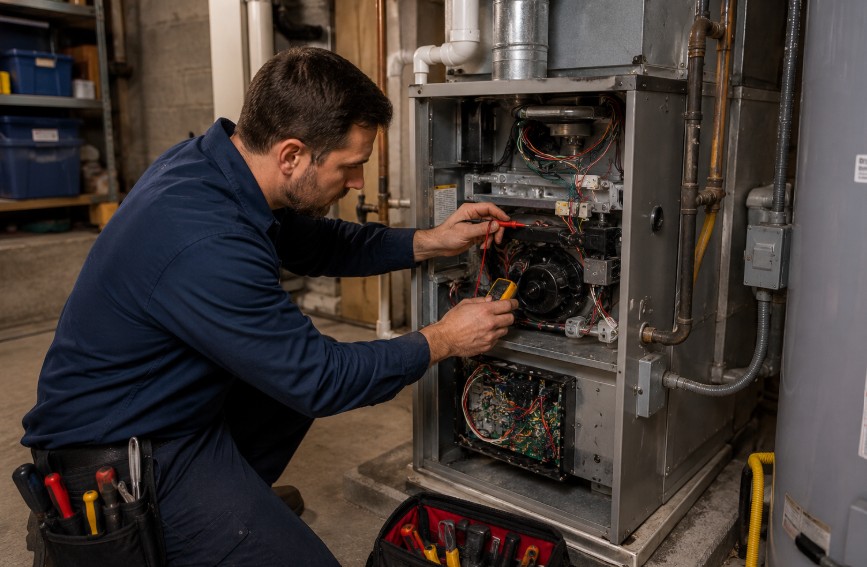
Emergency Furnace Repair in Memphis, TN
Furnace out during a cold snap? A licensed technician can be on the way today — nights, weekends, and holidays included, with a real diagnosis before any repair starts.
When the furnace goes out during a Memphis cold snap, the last thing you want is a multi-day wait. Memphis Emergency HVAC Pros provides emergency furnace repair across Memphis and Shelby County, any time of day, with technicians who diagnose the actual issue instead of guessing. Whether your furnace won't turn on, isn't producing heat, or is showing warning signs like a yellow pilot light or a gas smell, we're equipped to respond quickly and safely.
Why Furnaces Fail Hardest During
Memphis's Coldest Snaps
Memphis winters are mild most of the year, and that's part of the problem — a furnace that sits idle for ten months only gets a real workout during the occasional hard freeze or ice event, and that's exactly when a weak component finally gives out. Igniters, pilot assemblies, and blower motors that have been dormant since last winter are the parts most likely to fail the moment they're asked to run continuously for days, which is common during Memphis cold snaps and the multi-day ice events the city has seen in recent years.
Housing era matters here too. Older homes in Midtown, Cooper-Young, and other pre-war neighborhoods often still run older gas furnaces with mechanical pilot lights and simpler ignition systems, which tend to fail more often than the electronic ignition standard in newer units. Newer suburban homes in Cordova, Collierville, Bartlett, and Germantown are more likely to run heat pumps with electric backup heat strips — a different failure pattern, since those systems can't produce enough heat alone during a hard freeze and lean entirely on backup elements that go untested the rest of the year.
Across the city, ductwork sitting in unconditioned attics loses heat on the way to the vents, particularly in homes where insulation has settled or degraded over the decades — so even a fully functioning furnace can struggle to keep a home comfortable during a genuine cold snap.
Signs Your Furnace Needs Emergency Repair
-
No heat at all — the thermostat is calling for heat but nothing's happening, usually pointing to an ignition, gas supply, or electrical issue.
-
Furnace won't turn on — could be a tripped breaker, a blown fuse, or a failed igniter or pilot assembly.
-
Blowing cold air instead of warm — often a pilot light or ignition failure, or occasionally a thermostat set incorrectly.
-
A gas smell near the furnace — a serious safety issue. Leave the home, avoid operating switches or the thermostat, and call the gas utility or 911 before calling for repair.
-
A yellow or flickering pilot light instead of a steady blue flame — can indicate a combustion problem and, in some cases, a carbon monoxide risk (more on this below).
-
Frequent short-cycling — the furnace turning on and off repeatedly instead of completing a full heating cycle, often from airflow restriction, a failing limit switch, or a sensor issue.
-
Unusual noises — banging, screeching, or rattling usually signals a mechanical issue with the blower motor or another moving part.
-
Rising gas or electric bills without a matching increase in comfort — often a sign the system is working harder than it should to produce the same amount of heat.
Common Furnace Problems We Fix in Memphis
Often the first thing to go on a furnace that's been idle most of the year.
Miscalibration, wiring problems, or compatibility issues with smart thermostats.
Restrict airflow and can cause the system to overheat and shut itself down as a safety measure.
Reduces or eliminates airflow even when the furnace itself is heating properly.
A safety-critical issue covered in detail below.
Can prevent the furnace from igniting or maintaining a consistent flame.
Common in older systems and homes with aging panels.
A safety feature that shuts the furnace down when internal temperatures run too high, often triggered by an airflow problem elsewhere in the system.
What to Expect: Our Emergency Furnace Repair Process
A hands-on assessment of the furnace, thermostat, and surrounding ductwork.
Testing to identify the actual cause, including a check of the heat exchanger and combustion components.
A clear price before any work begins.
Most issues resolved in the same visit.
Confirming safe, consistent heat output before we leave.
What Affects the Cost of Emergency Furnace Repair
-
What's actually broken
An igniter or thermostat fix costs far less than a cracked heat exchanger or a blower motor replacement.
-
Furnace type
Gas furnaces, electric furnaces, and heat pump backup systems each involve different parts and labor.
-
Age and parts availability
Older furnaces may need harder-to-source parts, adding time to the repair.
-
Timing
After-hours or holiday dispatch during a cold snap is quoted upfront, same as any other call.
We provide a free, upfront estimate before any work begins, so you get a real number for your specific system.
Understanding Carbon Monoxide Risk with Gas Furnaces
A furnace's heat exchanger has one critical job: keep the combustion gases produced by burning fuel completely separate from the air blown into your home. When a heat exchanger cracks — usually from years of metal expanding and contracting through repeated heating cycles — that separation can fail, allowing carbon monoxide into your home's air supply.
This risk rises with the age of the furnace, and a meaningful share of furnaces still running in Memphis's older housing stock are well past 15 years old. Warning signs include soot or discoloration around the furnace cabinet, a yellow rather than steady blue pilot flame, unusual condensation on nearby windows, or headaches and nausea that ease after leaving the house. If you notice any of these signs, or a carbon monoxide detector alarms, get everyone outside into fresh air first and call emergency services — that's not something to wait on a technician for.
A working carbon monoxide detector near sleeping areas is a genuinely important safeguard in any home with a gas furnace, especially an older one, and an annual furnace inspection remains the most reliable way to catch a developing heat exchanger crack before it becomes a safety issue rather than just a comfort one.
Why Waiting on Furnace Repair Costs You More
A furnace issue rarely fixes itself, and waiting usually makes the eventual repair bigger. A failing igniter that keeps getting reset can wear out the control board around it. A blower motor struggling to turn can burn out completely rather than simply needing a bearing replaced. And in Memphis, a home without heat during a genuine cold snap risks more than discomfort — pipes in exterior walls or crawlspaces can freeze and burst without adequate heat, turning an HVAC problem into a plumbing and water-damage problem within a day or two. Getting a furnace issue addressed quickly is almost always the cheaper, safer option.
Why Memphis Homeowners Trust Us with Furnace Repair
-
24/7 emergency dispatch — real people answer, any hour, any day of the week
-
Free, upfront estimates before repair work begins
-
Licensed and insured technicians on every call
-
Honest, transparent pricing — no inflated add-ons
-
Satisfaction guaranteed on every repair
Service Area
We provide emergency furnace repair throughout Memphis and Shelby County, including Bartlett, Cordova, Germantown, Collierville, Millington, Arlington, Lakeland, Whitehaven, Raleigh, Frayser, Hickory Hill, and Eads.
FAQs
Why does my furnace smell like burning dust when I first turn it on for the season?
Usually normal — dust that's settled on the heat exchanger and burners over the warmer months burning off during the first cycle. It should fade within an hour; if the smell persists or gets stronger, shut the system off and call for an inspection.
My pilot light won't stay lit. What does that mean?
Usually a failing thermocouple, a draft issue, or a dirty pilot assembly. It's a common repair, but not one to keep manually relighting without a technician checking why it keeps going out.
Why is my furnace short-cycling — turning on and off repeatedly?
Most often a restricted air filter, an overheating safety shutoff, or a failing sensor. It's worth addressing quickly, since short-cycling puts extra wear on the system with every cycle.
Do I need to replace my whole furnace if the heat exchanger is cracked?
In most cases, yes — heat exchangers are a core, non-serviceable component, and a crack is generally treated as a safety issue rather than a repairable part. We'll walk you through the real options for your specific unit.
How often should I have my furnace inspected in Memphis?
Once a year, ideally in early fall before the first cold snap, is the standard recommendation — and especially important for furnaces over 10–15 years old.